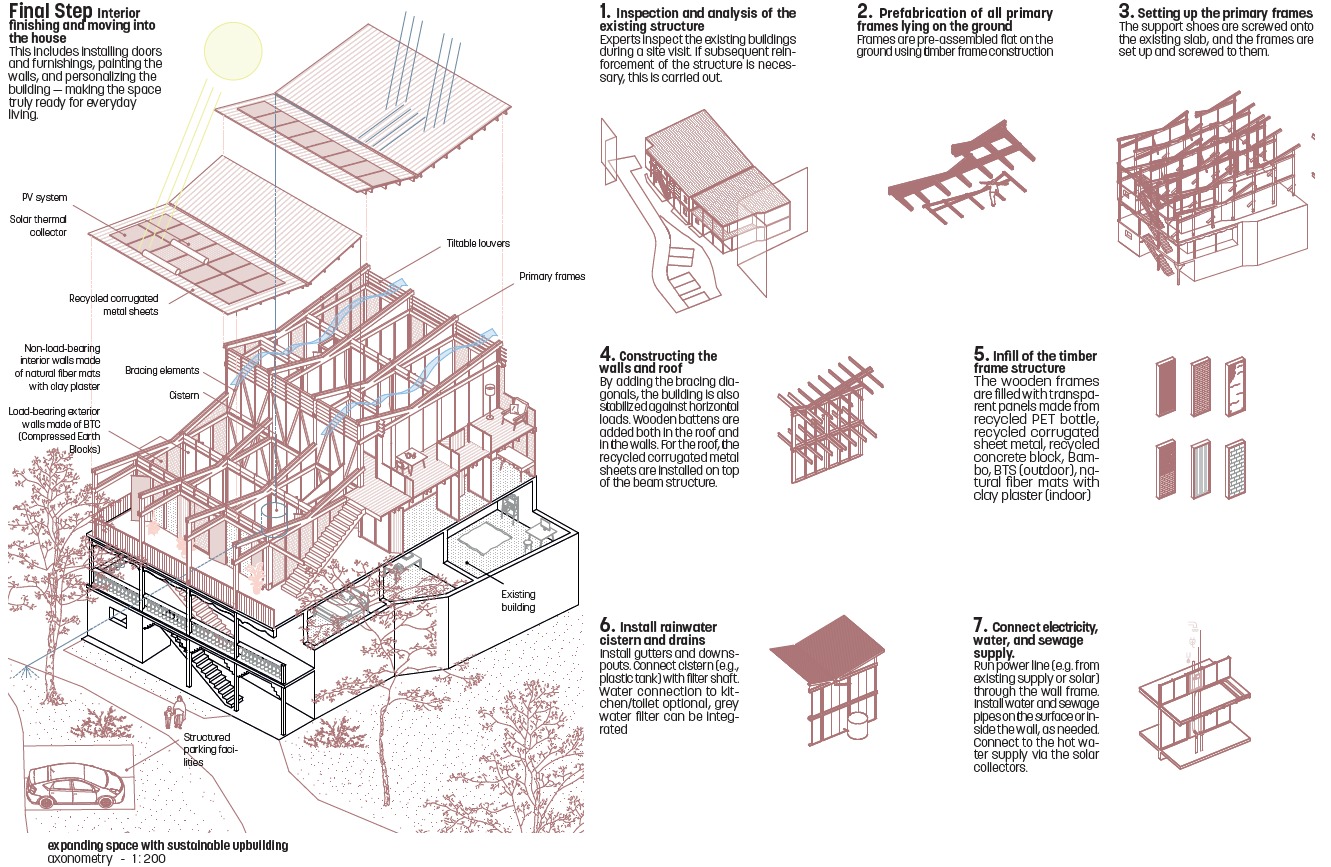
Four Rs for Dembeni explores how resilient urban futures in Dembéni, Mayotte can emerge from local knowledge, ecological systems, and collective agency rather than top-down planning. The project reframes knowledge, materials, climate, and ecology as interconnected actors shaping spatial development. Mangroves, rivers, monsoon cycles, and cyclones are understood as active forces within a layered green–blue system that reconnects city and landscape. Through circular material practices, incremental housing strategies, and locally rooted governance, the project proposes an adaptive, regenerative urbanism that evolves with place rather than imposing fixed form.
Collaborators
Felix Ridder//David Seitz//Luiz Seitz
Felix Ridder//David Seitz//Luiz Seitz
Year
2025
2025
Project Type
Concept
Concept
Awards
Europan E18 RUNNER-UP
Europan E18 RUNNER-UP
*
Fog Tower
Water becomes an experienceable part of the city landscape Water becomes an experienceable part of the city landscape Water becomes an experienceable part of the city landscape Water becomes an experienceable part of the city landscape
Water becomes an experienceable part of the city landscape Water becomes an experienceable part of the city landscape Water becomes an experienceable part of the city landscape Water becomes an experienceable part of the city landscape
*
Power Plant Relics
Water becomes an experienceable part of the city landscape Water becomes an experienceable part of the city landscape Water becomes an experienceable part of the city landscape Water becomes an experienceable part of the city landscape
Water becomes an experienceable part of the city landscape Water becomes an experienceable part of the city landscape Water becomes an experienceable part of the city landscape Water becomes an experienceable part of the city landscape
*
Water Tanks as Urban Elements
Water becomes an experienceable part of the city landscape Water becomes an experienceable part of the city landscape Water becomes an experienceable part of the city landscape Water becomes an experienceable part of the city landscape
Water becomes an experienceable part of the city landscape Water becomes an experienceable part of the city landscape Water becomes an experienceable part of the city landscape Water becomes an experienceable part of the city landscape
The transformation of Dembéni, at theheart of Mayotte, demands not a topdownmasterplan imposed from afar,but a profound, situated reimaginingrooted in local knowledge, ecologicalresilience, and collective agency. It is aprocess of unearthing what is alreadypresent: the wisdom, relationships,and material capacities that form thefoundation of a truly regenerativeurbanism.
.jpg)
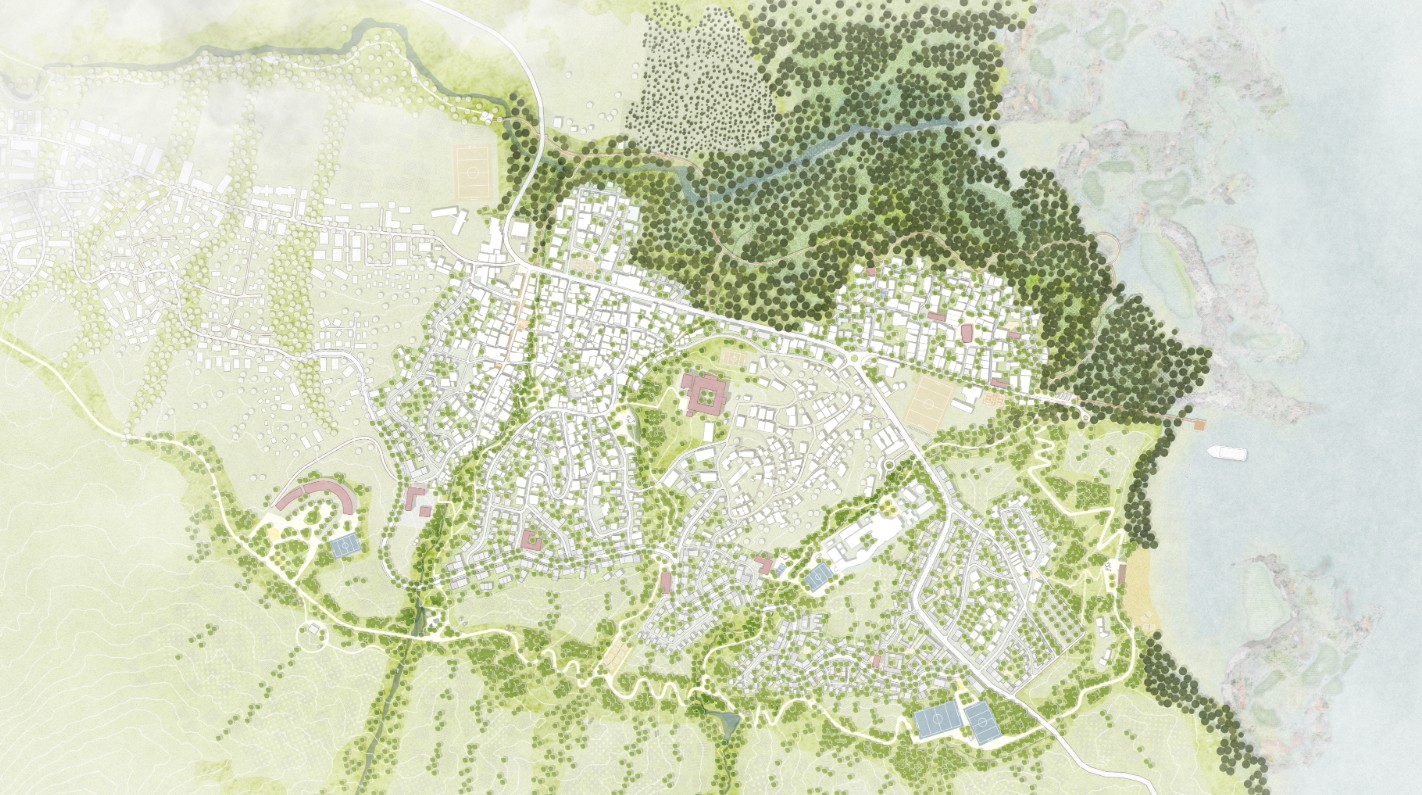
Dembeni in 2060
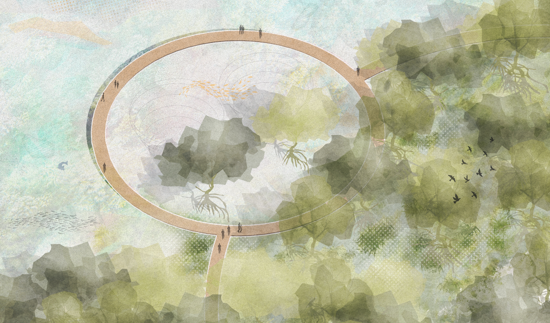
Mangrovewalk
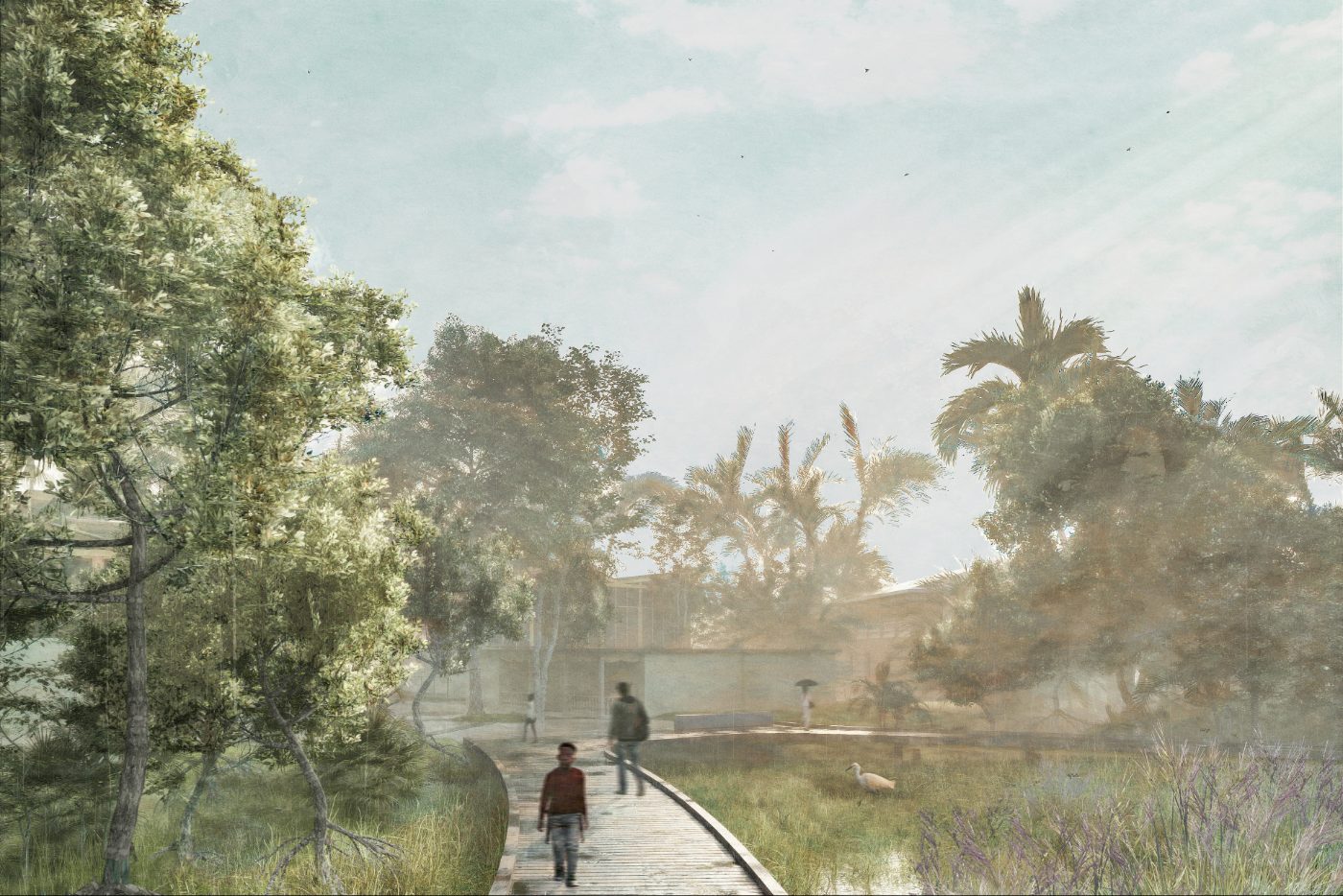
While Chapter 1 maps the field of actorsand existing resources, Chapter 2translates this knowledge into spatialconsequence. What unfolds is not a fixedmasterplan, but a gradual and adaptivetransformation, anchored in theterritory. At the heart of this vision liesa layered spatial system composed ofa green belt, green-blue corridors, andecological buffers which reconnectsthe city to its environment. The mangrove forest, long threatenedby informal construction, becomesthe ecological spine of the new urbansystem. Fragmented patches areconsolidated into a continuous coastalgreen belt, functioning as a natural barrieragainst floods, erosion, and cyclones.This belt is linked to a renewed rivernetwork, where existing watercourses arere-meandered and reconnected. New sidearms and retention zones increase waterabsorption and biodiversity, while alsocreating public spaces that cool densedistricts and offer respite in a changingclimate. These green–blue corridorsdo not only manage risk they createvalue, linking people to landscape.
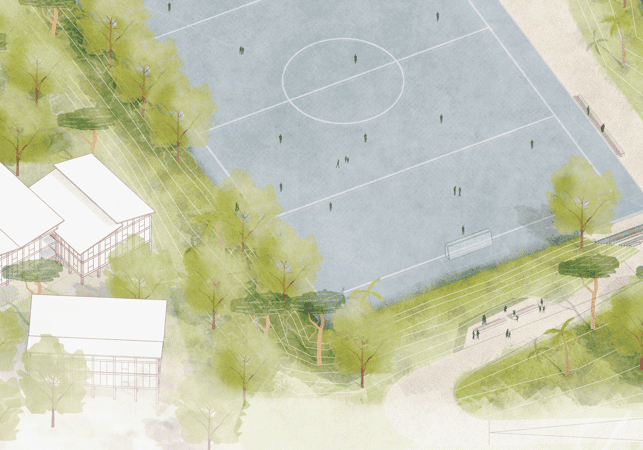
Greenbelt
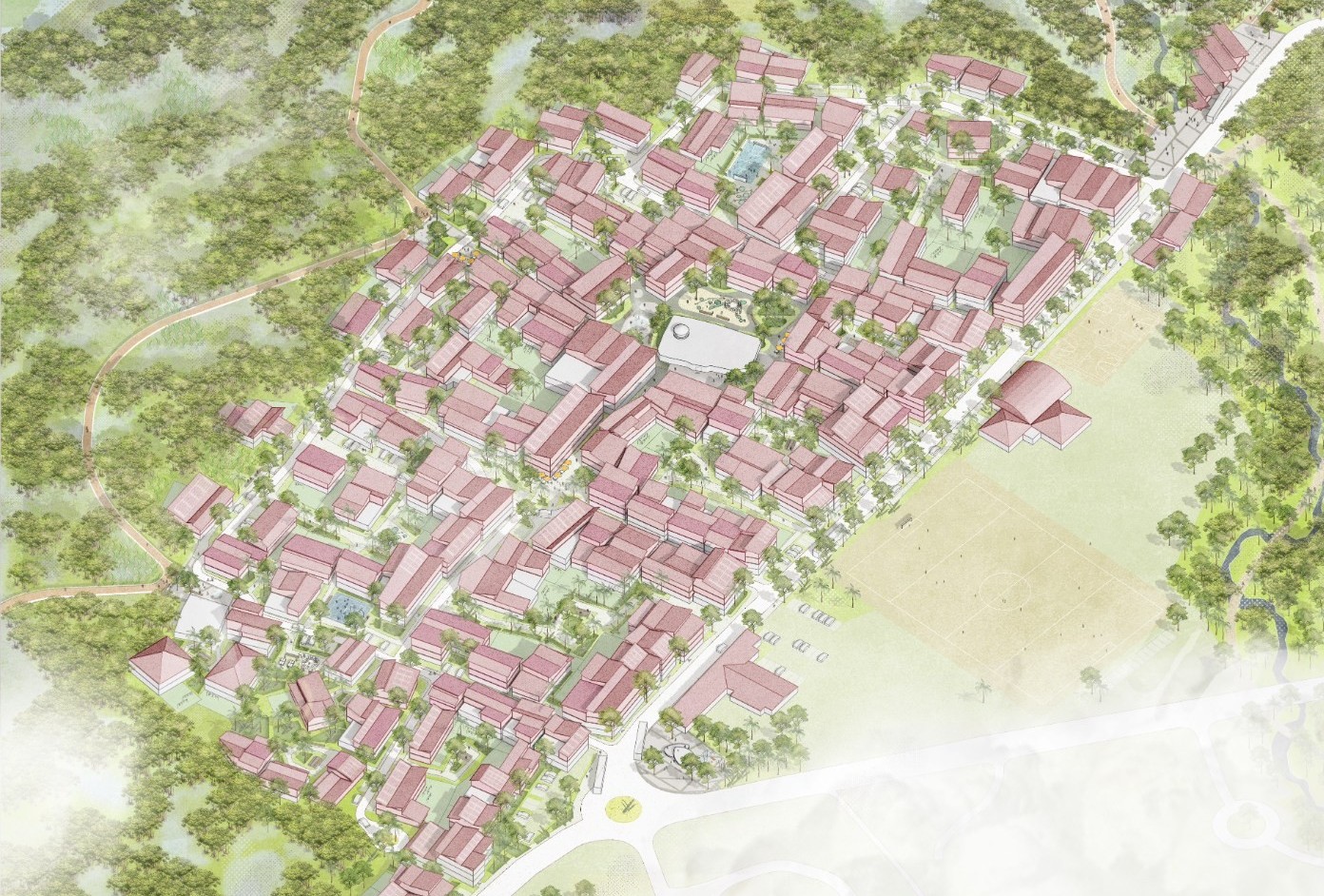
Dembeni

Perspective Dembeni
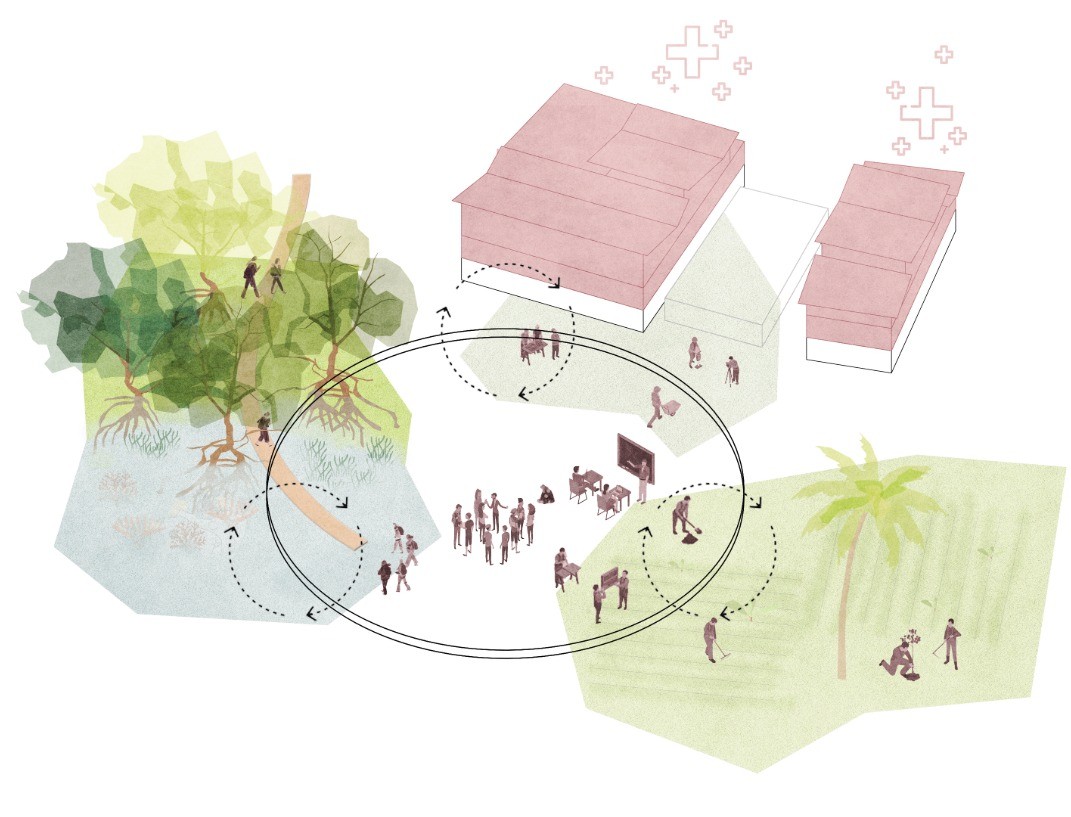
In the Site Area, the goal is twofold: torehabilitate the mangrove ecosystem andto radically improve living conditions forresidents. In addition, the settlementsof Manyasini and Mouhokoni must bedismantled due to their location in thenature zone and poor living and healthconditions.. Legal frameworks such asthe Letchimy Law (No. 2011-725) and theRHI scheme (Code de l’urbanisme L 30-1 etseq.) provide the basis for this transition. a fundamental reconfiguration. Streetsare reorganized as one-way axes withnew drainage systems and retentionbasins. The area opens towards themangroves via a “Mangrove Walk”, a raisedboardwalk with educational signage andecological observation points. A “MarineEcosystems Loop”, co-developed with theuniversity, offers research and learningopportunities—bridging environmentalawareness with academic engagement.A central gathering space—the UnityPlaza—is established near the mosque. Itis redesigned as a shaded, car-free civicspace, integrating climate adaptationfeatures like retention zones and ventilationcorridors.